Huawei B5328-58 4 x 4 MIMO TD-LTE Indoor CPE
* LTE Cat5 TD-LTE Indoor CPE
* Support LTE TDD Band 34/38/39/40/41
* GCT GDM7243Q Chipset
* DL 2x2/4x4 MIMO
* DL 210Mbps/ UL 16Mbps
* WiFi 802.11b/g/n, 2.4GHz
Monday, April 17, 2017

Netgear AirCard 810 LTE Category 11 Mobile Hotspot
Among the 4G LTE routers and mobile requirement, Netgear offers a new device that meets both mobility and a fixed 4G solution, while supports LTE category 11. In category 11, the maximum theoretical downflow could reach 600 Mbit/s. The AirCard 810 manages the 3-band aggregate to achieve these flow rates.


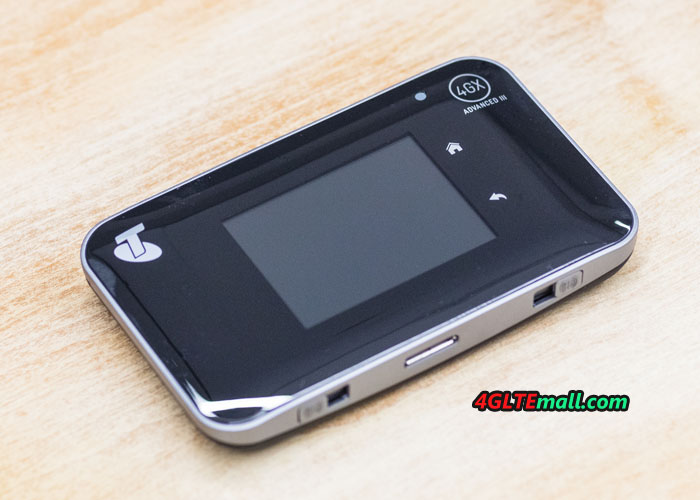
Aircard 810 Technical Specifications
The LTE bands supported by the AirCard 810 are:
3G UMTS: B1, B2, B5, B8
LTE: B1, B3, B7, B8, B28
With the band of 700MHz (B28), the aircard 810s could support the LTE Bands in Europe and other areas, and the LTE category 6 (DL 300Mbit/s & UL 50Mb/s) will be well supported for many network operators. However, the AirCard 810 does not support 2G. The Hot-Spot features a Wi-Fi 802.11ac/b/g/n on 2.4GHz or 5 GHz, 2 × 2 MIMO, and supports multiple SSID and WPS.
Interestingly, the 2.4-inch color LCD screen is tactile and allows operation in menus, avoiding the use of a PC or a smartphone to change the settings. There are dual external antenna connectors in TS9 format, perfect for increasing wireless signal in the countryside.
The design is very classic, with removable battery, a mains charger equipped with an adapter "English". A USB cable allows the device to be charged, while another USB cable (too short) allows it to charge a smartphone from the Hotspot battery.
The removable lithium-ion battery of 2930 mAh, allows continuous operation time about ten hours depending on the use and up to 250 hours standby time. You will find in the functionality of this MiFi router in the web interface, including the network settings, port transfer, DMZ, parental control, QOS etc.
Netgear DC112A Smart Cradle for Aircard 810s
What we are interested is in the LAN-WAN extension station for this Netgear WiFi hotspot.
The DC112A cradle allows the AirCard 810 hotspot (and other models) to be connected, but it's not just a docking station.
The DC112A station provides few additional functions than predecessor model DC113A. In practice, the DC112A is a real Internet WAN router with all the functions expected on a router, but it hosts the AirCard 810 hotspot via a USB 3.0 connection, to truly mate it to its functions.
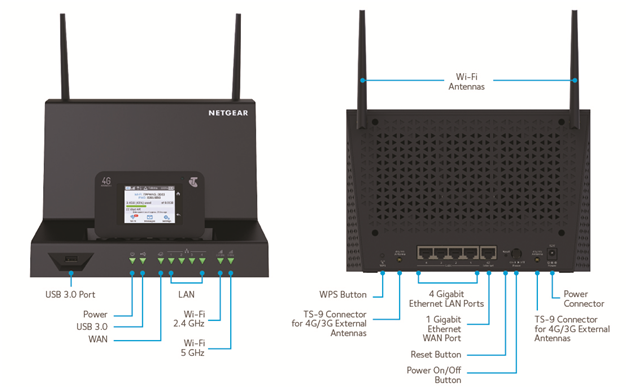
The DC112A station is equipped with a Gigabit WAN and 4 gigabit LAN ports connection to connect to your Access Point or Boxing as well. It is a router that offers all the usual functionalities (IP V6, DMZ, QOS, port forwarding, DHCP ...) and offers WiFi functions 802.11 ac on 2.4 and 5 Ghz, as well as a front USB 3.0 connector allowing sharing of Data, including the Internet.
Connectivity is important, the cradle is equipped with 2 large WiFi antennas (SMA format).Two WAN 4G/3G antennas are present inside the unit, allowing greater range and reception for the AC810. The latter can also be replaced by external antennas, since the station also has 2 TS9 sockets for connecting a 4G/3G external antenna with dual connectors.
Once the AC810 hotspot is connected to the station, Netgear offers us an operation of the 2 devices "on demand" and offers a configuration between the WAN connection and the 4G data connection.
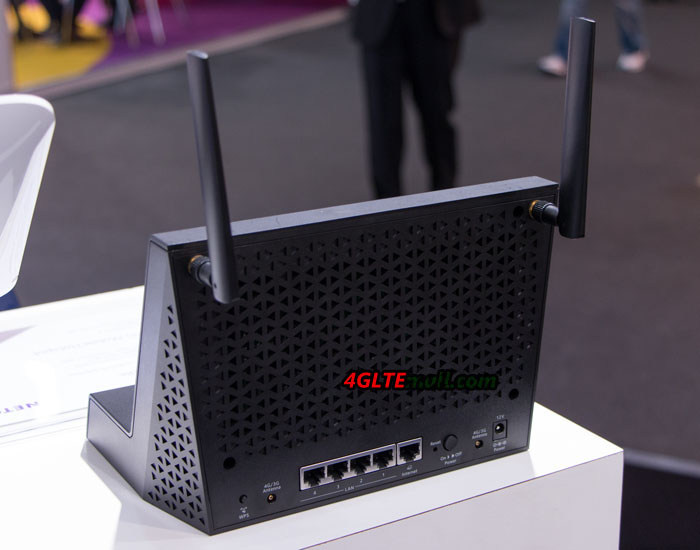
The whole solution therefore offers a mixed WAN-4G solution that provides LTE management with aggregation capable of reaching speeds of 300 Mbit/s to 600 MBit/s downlink depending on the country and the operators that surround you. The whole equipped with connectors of antennas that can meet many needs. Finally, if you go on the move, it is simple to put the hotspot in your pocket, without moving the WAN station, and thus leaving a WAN Internet connection totally available on site.
If you like the Netgear Aircard 810s, welcome to click here: http://www.4gltemall.com/netgear-aircard-ac810s-4g-lte-cat11-mobile-hotspot.html
Huawei B2338-168 FDD/TD-LTE Outdoor CPE
Huawei B2338-168 FDD/TD-LTE Outdoor CPE
* World’s Fastest TDD+FDD Outdoor CPE
* Category: LTE DL Cat12,UL Cat13
* DL 420Mbps/UL 30Mbps
* DL 4*4MIMO + 2CC CA
* UL 64QAM
* WiFi 2x2 MIMO 802.11ac/b/g/n, dual-band
Wednesday, April 12, 2017
Huawei B2268 B2268S B2268H 4G TD-LTE Outdoor CPE
Huawei B2268 B2268S B2268H 4G TD-LTE Outdoor CPE
* Huawei B2268S/B2268H TD-LTE Outdoor CPE
* LTE Category 4 CPE
* DL 150Mbps/UL 50Mbps
* 2 x SMA connectors for external antenna
* Supports up to 32 devices
* 2 x RJ45 LAN ports + 1 x RJ11 Telephone port + 1 x USB2.0
Tuesday, April 11, 2017
Samsung Presented New Flagship Galaxy S8 and S8+
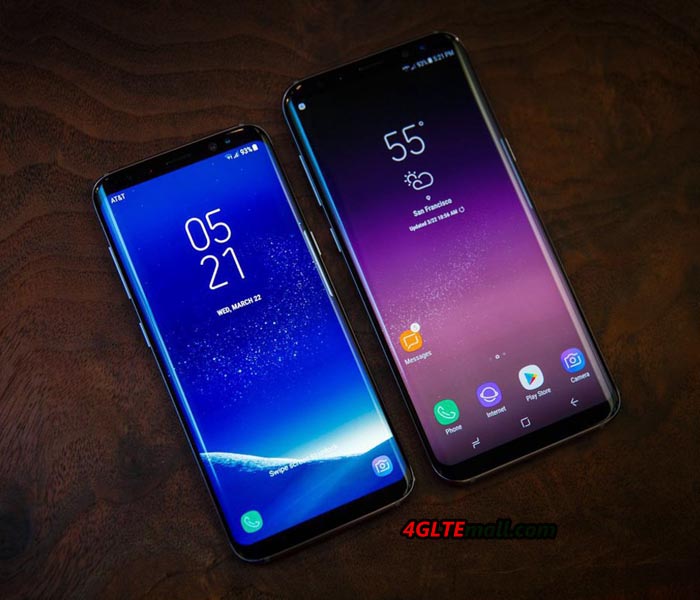
Samsung today introduced its two new flagship smartphones Galaxy S8 and the Galaxy S8+ for the year 2017. The Galaxy S7 Edge gets two successors, which differ mainly by the display size: the Galaxy S8 has a 5.8 inch display while the Galaxy S8+ has a 6.2 inch display. Both the display of the S8 and the S8+ is rounded on both sides, a version without edge display is no longer available. The highlight is certainly the almost frameless design of the Samsung Galaxy S8, the display occupies nearly the entire front, the frames above and below the display are significantly thinner compared to the Galaxy S7. It’s said the Galaxy S8 would be available in the market at the end of April 2017.


Design and display
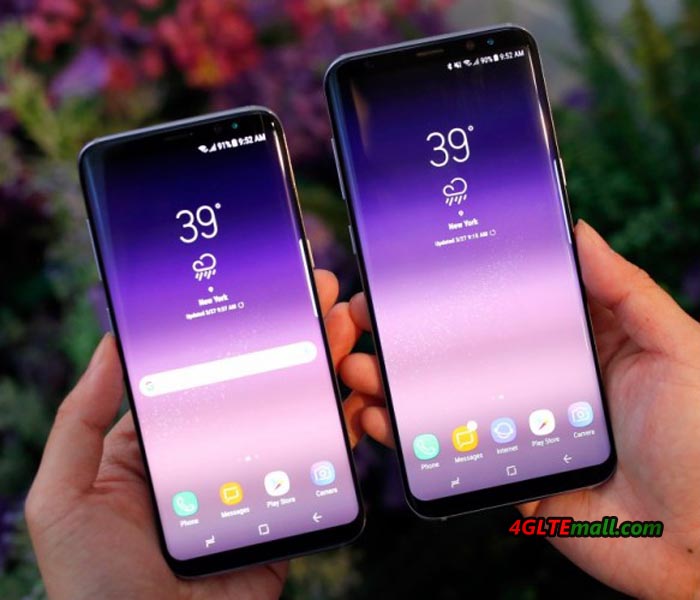
Visually, the Samsung Galaxy S8 and the Samsung Galaxy S8+ differ only in size. The S8 dimensions are 148.9 x 68.1 x 8.0 millimeters and weight is 152 grams, the S8+ dimensions are 159.5 x 73.4 x 8.1 millimeters and weighs 173 grams. The display has an aspect ratio of 18.5: 9 on both devices, so the devices are very narrow compared to 16: 9 devices with the same display diagonal. For comparison: an iPhone 7 with 4.7 inch display (16: 9) is only 0.8mm narrower than a Galaxy S8 with 5.8 inch display.
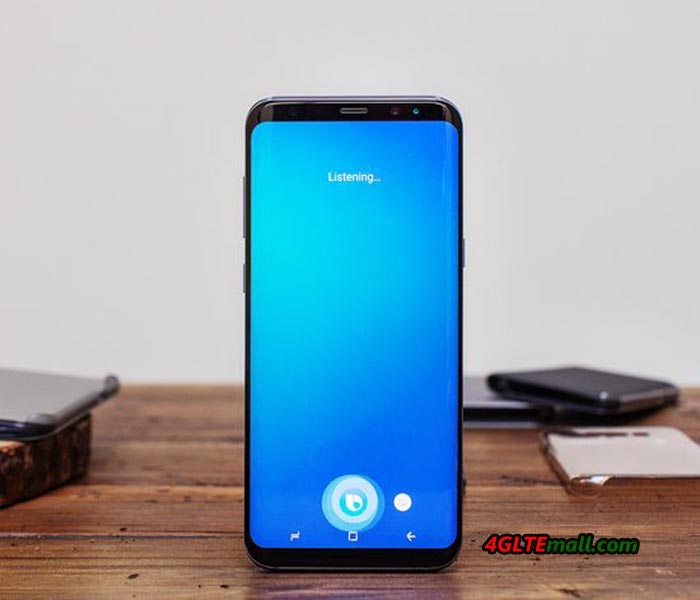
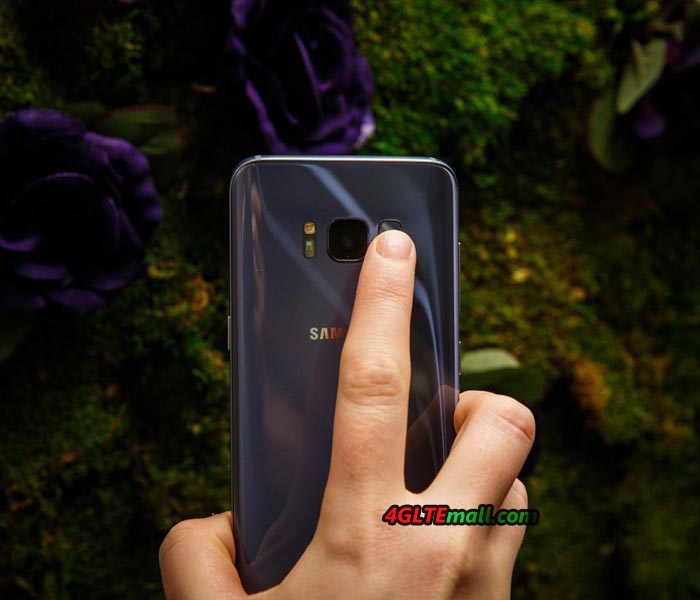
The design is broadly similar to that of the Galaxy S6 Edge and Galaxy S7 Edge, the device consists largely of glass, only the frame is made of metal. However, due to the large display, the home button has given way to software buttons and the fingerprint sensor has been placed on the back side of the camera.
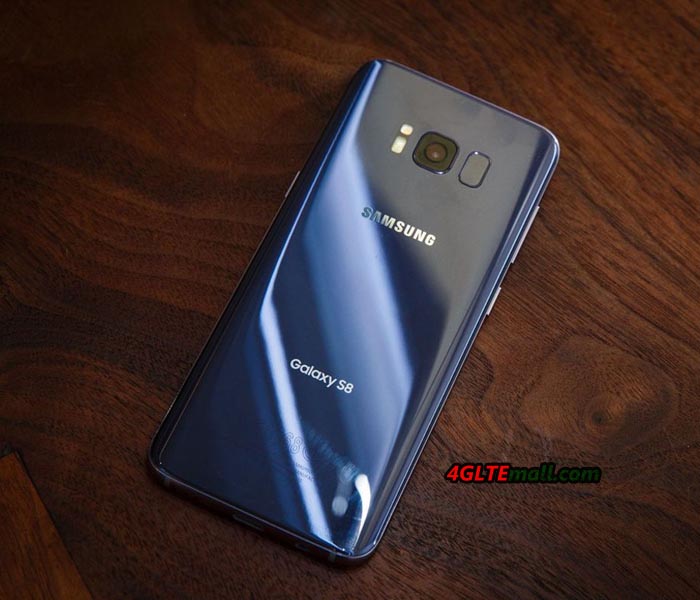
Technology and software
The Samsung Galaxy S8 is one of the first smartphones to support LTE Category 16. This allows extremely high speeds to be reached via the mobile network, depending on the extent of the network up to 1 Gbit/s in the downlink. As a processor, there is a octa-core Samsung Exynos 8895 with 64Bit, 4 x 1,7 GHz and 4 x 2,3 GHz. In other markets a Qualcomm chipset is installed, the performance should be comparable. The memory is 4 GB and the internal memory measures 64 GB (UFS 2.1 technology, via MicroSD expandable). The Galaxy S8 have versions with single sim and dual SIM functionality for different markets and carriers, the sim type is Nano-SIM.
The back camera of the Samsung Galaxy S8 offers a resolution of 12 megapixels and has an f1.7 aperture. The sensor works in the 4: 3 format, who would rather take photos in the 16: 9 format, has to deal with a lower resolution. The camera on the front takes photos with up to 8 megapixel resolution and also offers a f1.7 aperture.
In the WLAN area, the Galaxy S8 offers a very modern equipment. The 802.11ac standard is supported with MU-MIMO antenna technology, in combination with a modern MU-MIMO router, you should get significant speed advantages. The Galaxy S8 also supports NFC and Bluetooth 5.0 as well as various satellite navigation systems.
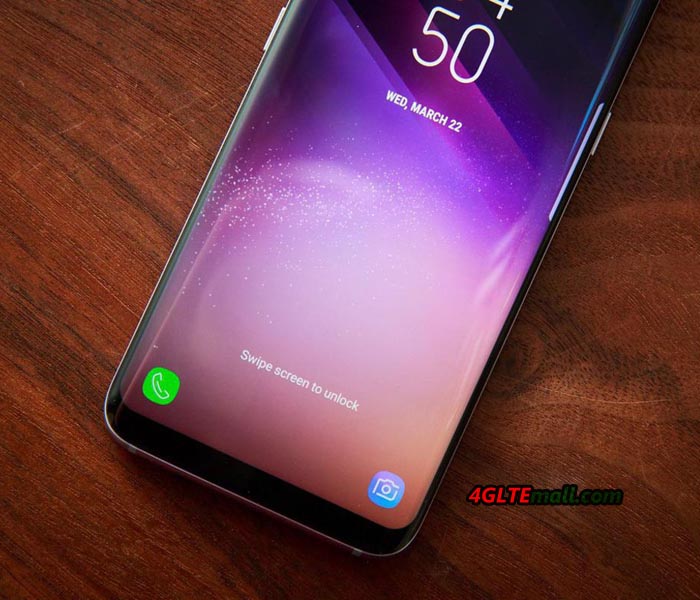
As an operating system, Android is used in version 7.0, of course again with a Samsung-adapted surface. The always-on display has been adapted in such a way that a home button is also visible when the display is switched off, since the physical home button has been lost in comparison with its predecessor.
Battery
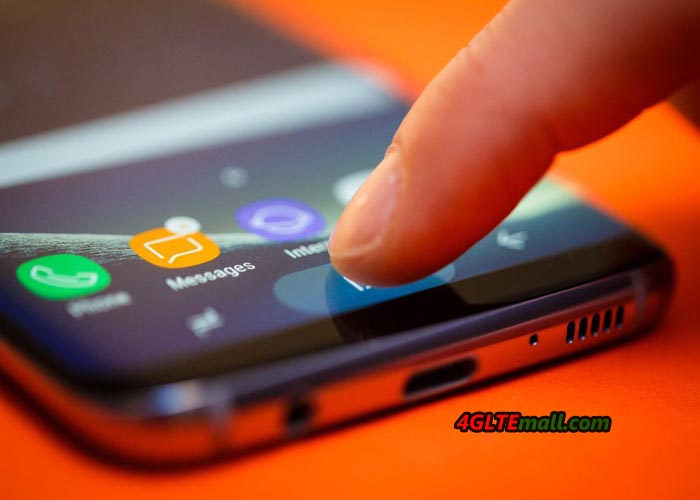
The Samsung Galaxy S8 has - like the Galaxy S8+ - a permanently installed battery, which cannot be removed. The capacity is at the S8 3.000 mAh, while in the S8+, it is 3,500 mAh. The two devices support wireless fast charging as well as fast charging via the USB type C connector. By the way: in contrast to the Apple iPhone 7, Samsung Galaxy S8 does not have the 3.5mm audio jack connection, so you can use normal headphones and is not dependent on adapter or Bluetooth.
Price and availability
The two versions of the Samsung Galaxy S8 can be pre-ordered from now on and until the 19th of April in the Samsung Online-Shop as well as www.4gltemall.com . From the 28th of April, the Samsung Galaxy S8 and S8+ will be available in the colors "Arctic Silver", "Midnight Black" and "Orchid Gray".
Thursday, April 6, 2017
TP-Link M7650 4G LTE Mobile Hotspot Review
The Chinese network specialist TP-Link was present at CeBIT 2017 and presented its new, mobile LTE router M7650. Purely optical, the model looks similar to the little brother TP-Link M7310, but inside is much more powerful hardware. With LTE Cat11 technology, the new TP-Link M7650 can handle a bandwidth of up to 600 Mbit/s in the download. Another highlight is that the M7650 provide networking with up to 32 devices via the WLAN network.


| Features and characteristics of TP-link M7650 | |
| Manufacturer and type: | TP Link M7650 |
| Chipset: | Qualcomm |
| LTE category: | Cat. 11 |
| Download rate up to: | 600 Mbit/s |
| Upload rate up to: | 50 Mbps |
| Supported LTE bands: | B1,3,7,8,20 (800/900/1800/2100/2600MHz) |
| Downwards compatible with: | HSPA+ (42.2 Mbit/s), UMTS, Edge, GPRS, GSM |
| Support for LTE-Advanced: | Yes |
| MIMO Support: | No |
| Connection for external antenna: | No |
| Network | LAN & WLAN | |
| LAN Ports: | no |
| WLAN Standards: | 802.11 a/b/g/n/ac |
| 5 GHz WLAN Support: | Yes |
| Encryption: | WEP / WPA / WPA2 |
| WLAN Hotspot Function: | Yes |
| Others | |
| Battery pack: | 3.000 mAh |
| Dimension: | unknown |
| USB: | No |
| Memory Card Expansion: | Yes |
| Release: | 2017 |
| Price: | unknown |
| available at: | www.4gltemall.com |
TP-Link M7650 – Powerful Mobile Hotspot
The new portable 4G router looks smart. In order to meet the ever-increasing maximum bandwidths in the LTE networks, a modem has been installed, which the Internet speed could achieve at up to 600 Mbps ( Cat. 11 ) via LTE accesses. The upload is, however, with a maximum of 50 Mbit/s. At the moment (at the end of March 2017) the manufacturer didn’t release detail specifications of this new model. Therefore, we cannot known all the technical specifications, such as the dimension and weight. However, TP-Link confirmed, among other things.
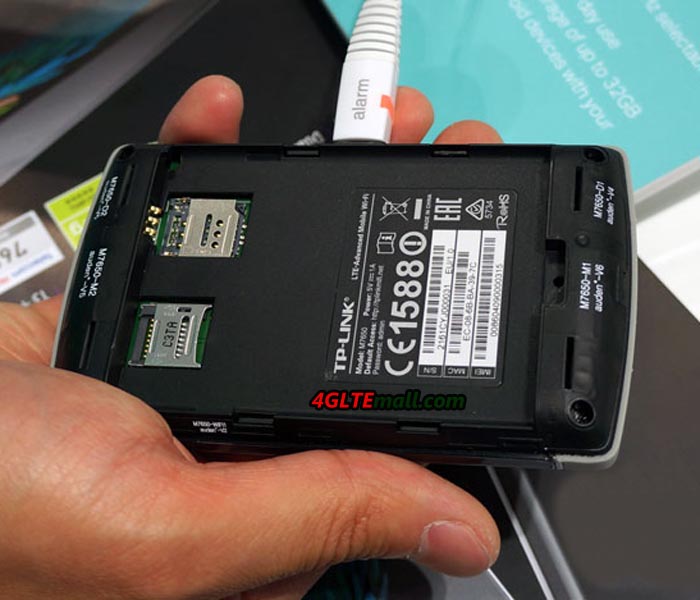
The first thing, the M7650 could reach download speed up 600 Mbit/s. The WiFi module of the M7650 makes a good job here, as up to 867 Mbit/s are implemented via a 5 gigahertz frequency. Devices that do not support WLAN at 5 GHz can get network with 2.4 GHz. With this spectrum, up to 300 Mbit/s can still be implemented in the download. This mobile LTE router should not be blamed for the battery life. According to the manufacturer, with 3,000 mAh rechargeable battery, a maximum of 15 hours of continuous operation is possible. A mobile device can not only be connected with the M7650 via hotspot, but also configure the router.

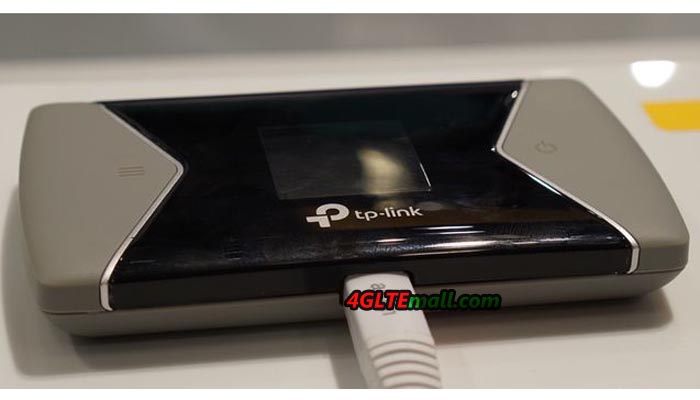
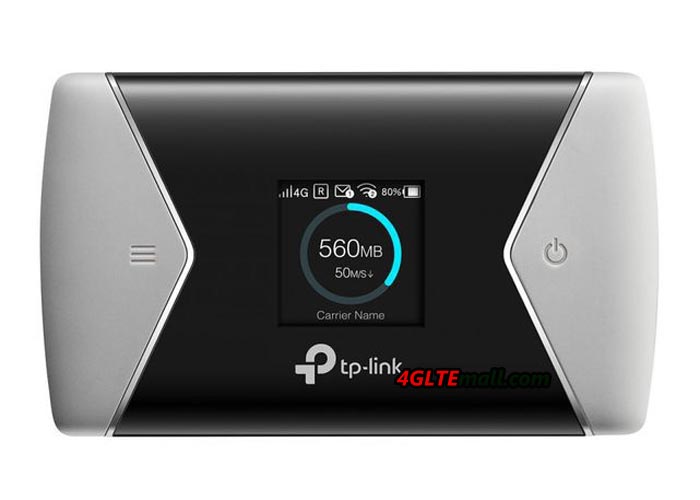
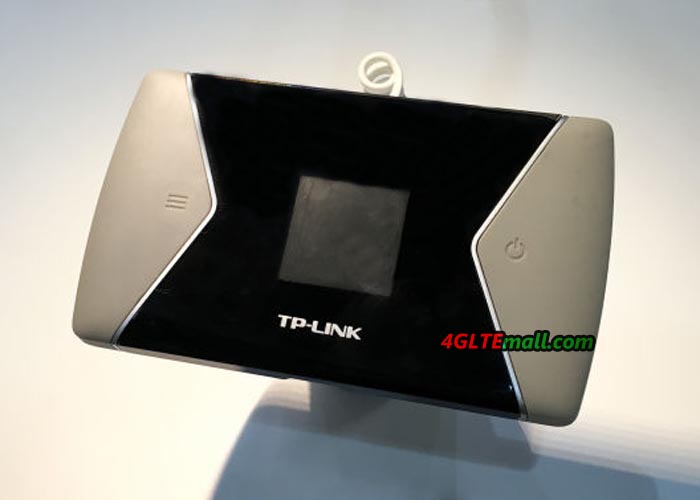
The Chinese corporation TP-link does not show a new design for M7650 so that it can be special out of the mobile gadgets; it just follows the appearance of the M7310. There is a color mixture of silver and black and an informative TFT display. All information relevant to the operation is displayed on the latter, including the LTE signal strength, the battery status, the current speed or the network operator identification, everything is clear.
The display measures 1.44 inches in the diagonal, it can be operated via physical buttons. It’s a pity that TP-Link M7650 does not have a touch screen while the similar model Netgear Aircard 810s already provides touch screen for users. What’s more, the integrated memory card slot accommodates microSD cards with a size of up to 32 GB.
Here now, the TP-link M7650 is not yet available on the market. There is another model Netgear Aircard 810s which has similar specifications and it's already available on the market. If you prefer TP-link M7650, 4G Mobile Broadband Mall (www.4gltemall.com) accept pre-order of this future-proof 4G mobile hotspot. Once we get this TP-link M7650, we would take test and show our report soon.
Tuesday, April 4, 2017
4.5G - LTE Advanced Pro
LTE Advanced Pro or 4.5G is a very up-to-date topic in the mobile world. Although the LTE successor 5G is talked much, 4.5G is already used by the network operators, and it already active and already contains many features, which will later also play a large role in 5G. Many carriers in Europe, such as Vodafone and Telekom, have already carried out initial tests with 4.5G or LTE Advanced Pro, which was launched to market shortly before. What you will understand exactly under 4.5G is to be explained in this article.
4.5G: Features
Right from the start: whether 4.5G or LTE Advanced Pro is the same. It is the successor of 4G and/or LTE Advanced. According to the Global Mobile Supplier Association (GSA), a network must support the following standards to be officially considered a 4.5G network: One of the following features:
- Ultra short latencies, ULL (ultra-low latency)
- An extension for machine communication, eg NarrowBand-Iot (NB-IoT) or eMTC
Additionally, at least one of the following features:
- 4 or more bundled downlink frequency ranges (4CC Downlink Carrier Aggregation, CC here for Component Carrier)
- The aggregate spectrum aggregated with carrier aggregation exceeds 60 MHz
- 2 or more bundled Uplink frequency bands (2CC Uplink Carrier Aggregation)
- Advanced MIMO antenna technology (eg 4 × 4 MIMO, 8 × 8 MIMO, Beamforming, Massive MIMO)
- 256QAM modulation in the downlink
- 64QAM modulation in uplink
- License Assisted Access (LAA), ie the additional use of unlicensed radio spectrum, eg in the 5 GHz frequency range
- Vehicle-to-X communication (V2X)
- Mission Critical Push to Talk (MCPTT)
- Network extensions for improved indoor positioning
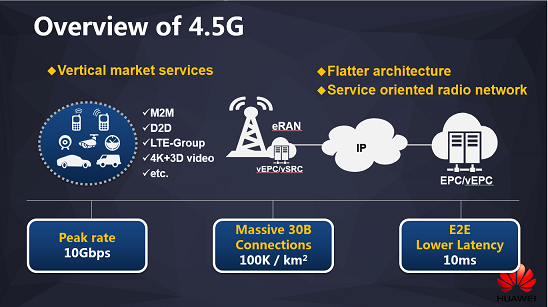
The V2X communication is already being tested under some carriers’ networks, for example Vodafone. Recently, there was a corresponding demo at the Mobile World Congress together with the network equipment supplier Huawei. In theory, Vodafone could also bundle significantly more frequency spectrum and thus introduce 4CC or 5CC carrier aggregation, but the provider has so far restricted itself to Triple Carrier Aggregation (LTE 800 + LTE 1800 + LTE 2600).
NB-IoT is used in the LTE band 8, that is to say in the 900 MHz range parallel to GSM, and band 20 (800 MHz) is also to be used. Up to now Telekom has bundled three frequency bands by means of carrier aggregation. In the future, however, the vendor could easily add additional carriers such as Band 8 (900 MHz) or Band 1 (2100 MHz). A significant increase in the downlink speed should therefore be possible in the near future. The use of 4 × 4 MIMO is also being tested in some locations and within the framework of its 5G, Vodafone has long been working on measures to further reduce latencies. Surely these ULL features will also be implemented in the 4.5G network.
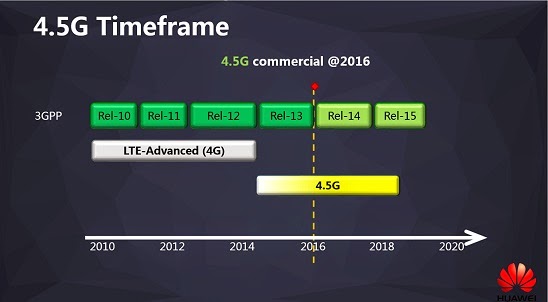
What does 4.5G bring to the end customer?
Many 4.5G features are particularly interesting for communication with machines or between machines, eg NB-IoT or ULL. As an end customer with a modern smartphone (from LTE Cat11 or newer, eg Huawei P10 or LG G6), there is one benefit: the maximum possible speed is much higher than what is so far. The expansion of LTE on other frequency bands, eg band 8 or band 1, will allow better network coverage in some places. Massive MIMO, in particular, will have a significant improvement in the average speed for the individual user, particularly at locations with very high capacity utilization.
Subscribe to:
Posts (Atom)